MAFALDA ARNAUTH 

 Official page
www.mafaldarnauth.com

 Reproduce
Listen demo

 News headlines
MAFALDA ARNAUTH, FLOR DE FADO
 
 Information for programmers


 Biography
MAFALDA ARNAUTH


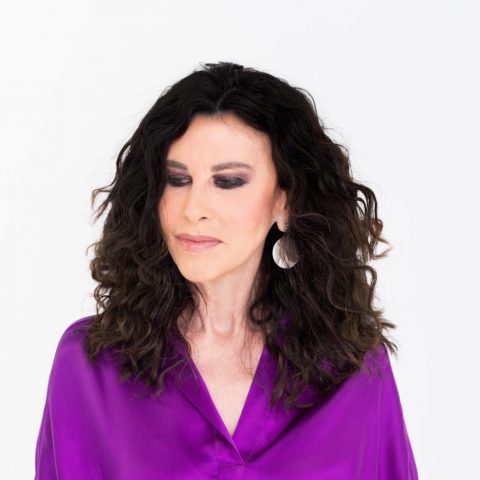
Mafalda Arnauth was born in Lisbon in 1974, and music has been a passion for her since she was a young girl. The freshness of a young “flawless” voice captivated listeners initially by its spontaneity, it then delighted fans by updating collective Portuguese memory via a string of previous hits, and finally proved itself by its very nature, by the compositions themselves and her personality.

She was 24 when she began her career with an album produced by João Gil, and this won the “Blitz” publication’s Revelation Award. The following year she was nominated for the “Golden Globes” as best singer. Her concerts all over the world ultimately manifest her own personality; Mafalda reveals herself through her songs, and she now feels the need to extend her repertoire in order to make her own small contribution to culture in her country. On every continent she leaves vestiges of the past which inspired her, the present inside her, and her ambitions for the future. In particular, what Mafalda Arnauth wants is to communicate …

But nobody born in Portugal stays away from their country for too long. In response to the almost unexpected success of the first album, in September 2000 she sang at a sell-out concert in Lisbon’s Belén Culture Centre, just one year after the launch of her first record, and a long tour of stages in Portugal and overseas.

In March 2001 she brought out her second record, “This voice going through me” (EMI), with production work this time by Amélia Muge and José Martins, and Ricardo Rocha (Portuguese guitar), José Elmiro Nunes (guitar) and Paulo Paz (double bass). From the poetry of Hélia Correia to the music of Fausto Bordalo Dias, this was a time of deep artistic and personal growth. Shortly afterwards, Mafalda became the first Portuguese artiste with international representation through Virgin Records.

In October 2001 she sang at her second concert at the Lisbon Culturgest hall, which was sold out weeks beforehand. Again, this signalled the commencement of a tour around a number of European capitals for an enriched artiste, more experienced, definitely more real and defined by an extended repertoire and maturity following a period of continuous work. Throughout 2001 and 2002 she performed on countless occasions, a reflection of the indisputable projection of the artiste and the golden period of fados – more interviews, talks, a resurgence of new values – and preparations began for the third album.


Mafalda Arnauth took a long rest from touring to rediscover the pleasure of penning songs, writing about the soul and its mysteries. Inventing new ways of “telling” life. And her fados are enhanced in terms of pleasure and happiness.

She produced her third album herself, and on this occasion her fados almost completely abandoned fatality, sorrow and shadows. Sadness nourished her in the search for hope; suffering, in the search for inspiration; difficulties gave her strength and support. 2003 will be remembered as a year of grace, since she completed the recording sessions with the satisfaction of someone who has reached a spiritual peace which may only be obtained when we have really found what we are looking for. Mafalda is enjoying the present, in the words of Sophia de Mello Breyner: “I will drink the light and the dawn, I will drink the voice of that promise which sometimes flies through me, and I will fulfil my entire being.” Mafalda Arnauth’s strength and soul have been renewed, and she is making ready to release her deepest enchantments (“Encantamiento”) …


Y por fin, en 2005, ve la luz “Diário”, el disco que consagra definitivamente a una Mafalda Arnauth realmente madura, que abandona el hermetismo del fado y se lanza a experimentar felices encuentros con otros registros musicales, en obras de compositores extranjeros: Tom Jobim, Vinicius de Moraes, Charles Aznavour, Fran Lasuen...

El fado no deja de estar ahí; ahí están sus formas, sus parámetros. Pero ahí sentimos también a una Mafalda más segura y decidida que nunca, a quien el dominio del fado otorga competencia para reencontrarse con el género de otra manera, la suya. Porque, como no podía ser de otra forma, este es un “Diário” intransferible, lleno de honestidad, cuyas páginas ha escrito en momentos de alegría, angustia, desilusión, ensoñamiento... Momentos ajenos que inevitablemente sentimos como propios.

Corporate information - Legal notice

Telephone: +0034943314800
Fax: +0034943215788
SYNTORAMA
Portuetxe street 53-A, 1st floor. Office104
20018 Donostia